
As an on-site facility specialist, I see a familiar pattern every September. The nights start cooling down, the kids are back in school, and folks are bringing their RVs home from one last summer adventure. For many of my neighbors here in the West Valley, especially those in Tolleson neighborhoods with homes built in the 90s and 2000s, strict HOA rules or limited space in those integrated garages mean parking a 30-foot Class A at home isn't an option. So, the search for a safe storage spot begins.
You’ve invested tens, if not hundreds, of thousands of dollars into your recreational vehicle. It’s not just a machine; it’s a home on wheels filled with memories. When you park it for the season, you deserve peace of mind. But not all storage facilities are created equal. Finding the right one involves more than just comparing prices - it requires a sharp eye for potential security flaws. I’ve put together this guide based on what I see every day to help you spot the red flags before you sign a lease.
Common Signs and Symptoms
Think of this as your Tolleson RV storage safety checklist. When you tour a potential facility, keep your eyes open for these seven common warning signs. A single issue might be explainable, but a combination of them should raise serious concerns about the overall rv storage security.
- Damaged or Inadequate Perimeter Fencing: Walk the perimeter. Do you see bent poles, gaps under the fence, or sections that are rusted through? A secure fence should be tall, in good repair, and free of any obvious weak points that would make it easy to climb or cut.
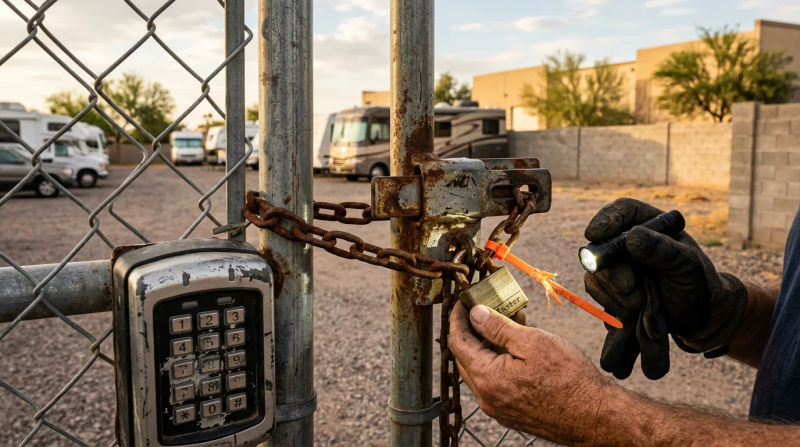
- Poorly Managed Access Gate: The gate is the primary point of secure RV storage access control. A red flag is a gate that’s left open during business hours, a broken keypad, or a simple chain and padlock system. A professional facility should have a sturdy, automated gate that requires a unique code for every tenant to enter and exit.
- Insufficient Lighting: Drive by the facility at night. Are there large, dark areas between RVs? Are the drive aisles well-lit? Poor lighting provides cover for thieves and vandals. In a mixed-use area like Tolleson with its warehouse corridors and high traffic, good lighting is a powerful deterrent.
- No Visible Security Cameras (Or Obvious Fakes): Look for cameras, especially at the entrance/exit and along key thoroughfares. The minimum RV storage gate and camera requirements should include high-definition cameras that clearly capture license plates and faces. If you see old, blurry cameras or plastic domes with no actual camera inside, that’s a sign that security is for show, not for real.
- Vague or Non-Existent Access Rules: Ask the manager about their policy for visitors or after-hours access. If the answer is vague or it seems like anyone can come and go without being tracked, that’s a problem. As lots get busier in September, strict enforcement of access rules becomes even more critical.
- Unkempt and Cluttered Property: Are there weeds growing everywhere, trash piled up in corners, or abandoned-looking vehicles taking up space? A messy facility often indicates lazy or absent management. If they don’t care enough to keep the property clean, they likely don’t prioritize security patrols or maintenance either.
- A “Ghost Town” Feeling: When you visit during business hours, is the office empty? Is there no one on site to talk to? A lack of visible staff or management presence is a major red flag. You want a facility where you know someone is actively monitoring the property.
What Causes This Problem
These symptoms don't just happen by accident. In my nine years in this business, I’ve learned they almost always point back to a few root causes within the facility's management and ownership.
First and foremost is a lack of reinvestment. A facility owner who isn't willing to spend money to repair a fence, upgrade to a modern gate system, or install a comprehensive camera network is prioritizing profits over your property's protection. Security infrastructure is expensive, but it's a fundamental cost of doing business responsibly. When you see deteriorating features, you're seeing a business that is cutting corners where it matters most.
Another major cause is poor on-site management. A great manager walks the property daily. They check the fence line, test the gate, replace burned-out light bulbs, and review security footage. They build relationships with tenants and know who should and shouldn't be on the property. When this active oversight is missing, small issues - like a hole in a fence - quickly become major security vulnerabilities. The unkempt grounds I mentioned earlier are a direct symptom of this passive management style.
Finally, some operators simply have a weak security philosophy. They view rv storage security as a marketing bullet point rather than a core operational commitment. They might install a few cheap, fake cameras to create the illusion of safety without investing in the real thing. This is particularly dangerous because it gives tenants a false sense of security while leaving their valuable assets exposed. True secure RV storage access control is a system of overlapping layers - fencing, gates, lighting, cameras, and vigilant management - that work together.
When to Walk Away
So, you’re touring a lot and you spot a few of these red flags. What do you do? It’s important to know when an issue is a minor inconvenience versus a complete dealbreaker.
Think of it this way: you can't