
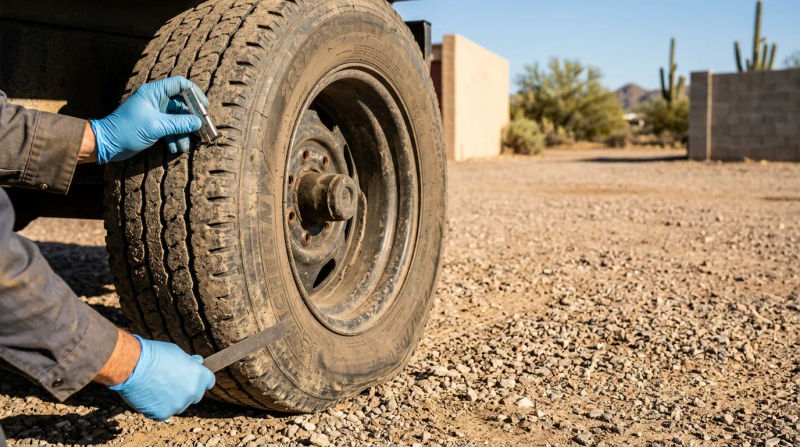
You’ve been waiting for this moment. The weather is perfect, the RV is packed, and the open road is calling your name. You pull your rig out of storage, excited for that first trip of the season. But as you get up to speed, you feel it - a subtle but persistent vibration, a rhythmic thump-thump-thump that wasn't there before. It can be unsettling and make you wonder if something is seriously wrong. As an on-site facility specialist here in the Buckeye area, I’ve seen this scenario play out many times. More often than not, the culprit is something simple but often overlooked: RV tire flat spotting.
Especially around Maricopa Colony, where our RVs might sit for a few weeks or months between adventures, this is a common issue. The good news is that understanding what causes it can help you prevent it and know what to do if you experience it.
Common Signs and Symptoms
Identifying the flat spot symptoms after RV storage is usually straightforward once you know what to look and feel for. The most common sign is a vibration that you feel through the steering wheel or the floor of your RV. Here’s a breakdown of the typical symptoms:
- Rhythmic Vibration: The most tell-tale sign is a vibration or thumping sound that increases with speed. It feels like you’re driving over a slightly bumpy road, even when the pavement is perfectly smooth.
- Steering Wheel Shake: You might notice the steering wheel shimmying back and forth, especially as you first start driving.
- Temporary Nature: For many, the vibration will gradually disappear after driving for 15 to 30 minutes. As the tire warms up from the friction of the road, the rubber becomes more pliable and often rounds itself back out. This is known as a temporary flat spot.
- Visible Flat Area: In more pronounced cases, you might be able to see a slightly flattened area on the bottom of the tire before you even start moving. This is easier to spot if the vehicle has been sitting for a very long time or if the tires were underinflated during storage.
It’s a strange sensation, but it’s the tire telling you it has been sitting in one position for too long. Recognizing these signs early is the first step in addressing the problem before it can impact your travel plans.
What Causes This Problem
So, what exactly is happening to your tires during storage? It’s a simple matter of physics. Your RV is incredibly heavy, and all that weight is concentrated on the small patches of rubber where your tires meet the ground. When the RV remains stationary for an extended period, the tire casing and belts can develop a “memory” of that flattened position.
The question I often get is, how long before RV tires flat spot? There’s no single answer, as it depends on several factors, but it can start to happen in as little as 30 days. Key factors include:
- Tire Pressure: This is the number one contributor. Underinflated tires have a larger, softer contact patch with the ground, making them much more susceptible to deforming under the vehicle's weight.
- Vehicle Weight: Heavier Class A motorhomes are more prone to flat-spotting than lighter travel trailers, simply due to the immense pressure on the tires.
- Tire Type: Tires with a high-performance rating or those with internal nylon belts (common in many RV tires) are often more prone to temporary flat-spotting than standard radial tires.
- Ambient Temperature: Here in Arizona, this is a huge factor. The wide temperature swings we see in the Maricopa Colony area cause tire pressure to fluctuate dramatically. A tire set to the correct pressure on a hot afternoon can be significantly underinflated on a cool morning, exacerbating the problem. The intense, dry heat can also cause the rubber compounds to become less flexible over time.
When a tire sits underinflated in one spot for months, the constant pressure can create a semi-permanent or even permanent flat spot where the internal structure of the tire is compromised.
When to Call a Professional
Most of the time, flat spots are temporary and resolve themselves. However, it's crucial to know when the issue is minor versus when it’s a serious safety concern. Here’s my advice on how to handle it.
First, before any trip, perform a thorough Maricopa Colony RV tire check. This is the best preventative step you can take.
- Visually Inspect: Walk around your RV and look at each tire. Check for obvious flat areas, but also look for cracks in the sidewalls (a sign of dry rot) or any bulges.
- Check the Pressure: Using a quality tire pressure gauge, check every tire - including spares! Inflate them to the pressure recommended by the RV manufacturer, which is usually found on a sticker inside the driver's side door jamb or on the side of the RV. Do not use the maximum pressure listed on the tire sidewall itself.
If you get on the road and feel that familiar vibration, give it some time. Drive for about 20 miles on a smooth, safe road. If the vibration smooths out and disappears, you were dealing with a temporary flat spot, and you’re likely good to go.
You should call a professional tire service immediately if:
- The vibration does not go away after 20-30 minutes of driving.
- The vibration is severe or gets worse as you drive.
- You see any visible damage to the tire, such as cracking, bulging, or exposed belts.
A persistent vibration indicates a permanent flat spot, which means the tire's internal structure may be damaged. Continuing to drive on a compromised tire is extremely dangerous, as it significantly increases the risk of a blowout. An experienced professional at a tire center can properly inspect the tire to determine if it needs to be replaced.
Conclusion
That thumping feeling you get after pulling your RV out of storage can be alarming, but it’s often just a case of temporary RV tire flat spotting. By understanding that tire pressure, storage duration, and our local Arizona climate play significant roles, you can take proactive steps to minimize the issue.
My best advice is to make a pre-trip tire check a non-negotiable part of your routine. Always ensure your tires are inflated to the proper PSI before you store your RV and before you hit the road. This simple five-minute check can save you from a bumpy start to your journey and help you catch more serious problems before they become dangerous.
If any of this sounds familiar, or if you’re unsure about the condition of your tires after a long storage period, don't hesitate. Get in touch with a local rv storage facility or a qualified tire professional for advice.