
It’s a familiar feeling for any RV owner in Goodyear. The intense summer heat is finally starting to give way, and those cooler September nights have you dreaming of a fall road trip. You head out to your rig, parked on the driveway of your home, ready to do a quick check-in, and that’s when you notice it: a faint, unpleasant smell. Or maybe you spot a few small, dark droppings near the pantry. Your heart sinks. It’s a classic calling card of an unwelcome visitor.
As an on-site storage and RV facility specialist here in the West Valley for the last nine years, I’ve seen this exact scenario play out countless times. When the temperatures start to swing, pests get proactive. That cozy, sheltered RV of yours looks like a five-star hotel to them. Understanding the warning signs is the first step in protecting your investment from what can become very costly damage.
Common Signs and Symptoms
Catching a pest problem early is everything. The longer critters go unnoticed, the more damage they can do. When my team and I help owners prepare their RVs for storage, we have a mental checklist we run through. These are the most common Goodyear RV storage pest warning signs you should look for during your own inspections.
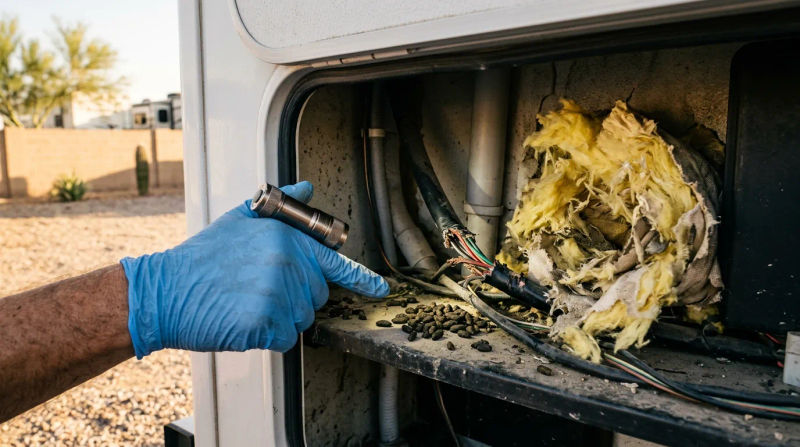
- Droppings: This is the most obvious and undeniable sign. Mouse droppings are small, black, and look like grains of rice. Rat droppings are larger, about half an inch long. You'll typically find them in secluded areas like inside cabinets, under sinks, in drawers, and along walls.
- Gnaw Marks: Rodents' teeth never stop growing, so they chew constantly. Look for small chew marks on wiring, PEX water lines, wood paneling, and plastic storage bins. Chewed wiring is especially dangerous as it creates a serious fire hazard.
- Nesting Materials: Have you found little piles of shredded paper, fabric, insulation, or cotton? Rodents will gather soft materials to build nests in warm, hidden spots like behind appliances, inside wall voids, or even within your engine compartment.
- Unpleasant Odors: A stale, musky smell of urine is a strong indicator of an active infestation. Unfortunately, if you find a dead rodent, the smell will be much stronger and unmistakable.
- Tracks and Runways: In dusty areas of your RV, you might see tiny footprints. Rodents also tend to use the same paths repeatedly, leaving behind greasy smudge marks along walls and baseboards from the oils in their fur.
- Strange Noises: If your RV is parked close to your house, you might hear scratching, squeaking, or scurrying sounds at night, when rodents are most active.
Finding any of these signs of mice in stored RV means it’s time to take immediate action. Don't assume it's just one; where there's one, there are often more.
What Causes This Problem
Understanding why pests are attracted to your RV in the first place is the key to prevention. It’s not just bad luck; it’s about eliminating the things they’re searching for: food, water, and shelter.
First and foremost is shelter. As September brings cooler nights to Goodyear, a parked RV offers a perfect escape from the temperature drop and any potential predators. It’s warm, dark, and protected. This is the primary driver behind fall and winter infestations.
Second is food and water. You might think you cleaned everything out, but a few crumbs in the carpet, a stray bag of chips in a cabinet, or even scented soaps and candles can be enough to attract RV storage pests. Any small, forgotten water source, like a drip in a faucet or condensation in a line, can also sustain them.
Finally, and most critically, is access. A mouse can squeeze through a hole the size of a dime, and a rat can fit through a quarter-sized opening. Many RVs, especially as they age, develop small gaps. The intense, dry Arizona air can cause rubber seals and weatherstripping around slide-outs, windows, and doors to shrink and crack. RVs parked on driveways of homes in Goodyear, many of which were built in the 1990s and 2000s as part of large, master-planned communities, are prime targets. The surrounding landscaping can act as a highway for pests, leading them right to your vehicle. Common entry points include:
- Gaps around plumbing and electrical lines entering the RV underbelly.
- Openings for slide-out mechanisms.
- Unsealed gaps in the firewall between the engine and the cabin.
- Vents for the refrigerator or furnace that are missing screens.
Learning how to stop rodents entering an RV in storage is a game of defense. You have to think like a pest and seal every potential entryway.
When to Call a Professional
Once you’ve found evidence of pests, the next question is whether you can handle it yourself or if it’s time to call for help. The answer depends on the extent of the problem and your comfort level.
DIY Prevention and Minor Issues: For prevention or if you've only found very minor signs (a few droppings), a DIY approach is often effective. My advice is to be thorough:
- Deep Clean: Before putting your RV into storage, vacuum, sweep, and wipe down every single surface. Remove all food, including dry goods, spices, and pet food.
- Seal Entry Points: Get underneath your RV with a flashlight and look for any gaps. Use steel wool (which rodents can't chew through) and spray foam sealant to close every hole you find. Check around pipes, wires, and vents.
- Use Deterrents: Many owners have success with peppermint oil-soaked cotton balls, fresh cab pouches, or other strong-smelling natural deterrents placed in cabinets and storage bays. Ultrasonic devices have mixed reviews, but some people swear by them.
- Set Traps: If you suspect a mouse is already inside, classic snap traps are often more effective and humane than poison baits, which can lead to rodents dying inside your walls.
When to Call for Help: Sometimes, the problem is too big to tackle alone. You should contact a qualified professional if:
- You see signs of a major infestation. If you are finding large quantities of droppings in multiple areas, it's likely you're dealing with a well-established colony.
- You suspect rats. Rats are larger, more destructive, and can be more difficult to eliminate than mice.
- You find significant damage. If you discover chewed electrical wiring, damaged plumbing, or torn-up insulation, it’s time for an expert. Damaged wiring, in particular, requires an experienced RV technician to ensure it's repaired safely.
- Your DIY efforts fail. If you’ve cleaned, sealed, and set traps but are still finding new signs of pests, a professional can help identify entry points you may have missed.
Conclusion
Protecting your RV from pests is an ongoing task, not a one-time fix. Here in Goodyear, the change of seasons is a critical reminder to be vigilant. The key takeaways are simple: be proactive with your cleaning, be relentless in sealing up even the smallest gaps, and be observant with regular inspections. Spotting the problem before it escalates can save you from thousands of dollars in repairs and ensure your RV is always ready for your next adventure.
Don't wait for a small sign to become a big problem. If you notice any of these warning signs and aren’t sure how to proceed, contact a local RV storage professional for an inspection and advice.