
As an on-site specialist here in Buckeye, I’ve spent the last nine years helping my neighbors find the right home for their RVs. And the first question I almost always hear is, “What’s this going to cost me?” It’s a fair question. Your RV is a significant investment, and storing it is part of the total cost of ownership. My goal here isn’t to sell you anything, but to give you a transparent, honest look at what you can expect to pay for RV storage in our area so you can budget wisely.
With September upon us, now is the critical planning window. The intense summer sun is starting to fade, but the fall and winter seasons bring their own challenges. Soon, the first snowbirds will arrive, and local owners will be looking to protect their rigs from the temperature swings and dust that define our climate. This drives up demand, especially for protected spaces. Let’s break down the costs so you can lock in a good spot before the rush.
Average Costs in Buckeye
When you start looking, you'll see that pricing isn't one-size-fits-all. The Buckeye RV storage cost depends heavily on the level of protection you choose. Here in the West Valley, you're primarily looking at two options: covered and enclosed. Based on what my team and I see every day, here are some realistic monthly price ranges you can expect for a standard-to-large Class A or fifth-wheel space.
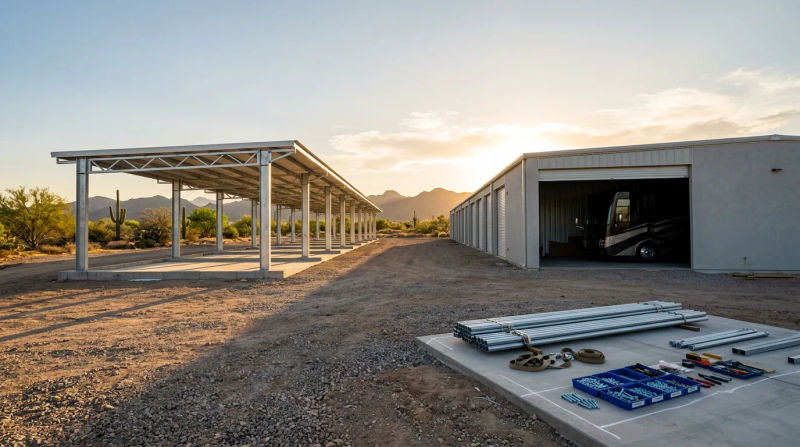
- Covered RV Storage: This is the most popular option in Arizona. It provides a solid roof over your RV, protecting it from the most damaging element we face: the relentless sun. It prevents roof damage, faded decals, and cracked seals. You’re still exposed to dust and critters, but it’s a massive step up from open-air parking. Expect covered RV storage rates Buckeye to range from $160 to $280 per month. The price variance typically comes down to the size of the space and the facility's amenities.
- Enclosed RV Storage: This is the premium choice, offering complete protection. Think of it as a private garage for your RV. It’s a fully walled, roofed unit with a roll-up door, shielding your investment from sun, wind, dust, rain, and potential pests. It also offers the highest level of security. For this level of protection, enclosed RV storage pricing Arizona generally falls between $350 and $650+ per month. Larger, drive-through units or those with electrical hookups will be at the higher end of that spectrum.
Factors That Affect Price
Understanding what drives these prices up or down will help you find the right fit for your budget and your RV. It’s more than just a roof; it’s about a combination of features.
- Type of Storage (Covered vs. Enclosed): As you saw above, this is the biggest factor. An enclosed unit is essentially a small building, so the cost to construct and maintain it is significantly higher, which is reflected in the rent. A covered space offers excellent value by protecting against the primary threat - sun damage - at a lower price point.
- Unit Size: RVs come in all shapes and sizes, and so do storage spaces. A 25-foot travel trailer will require a smaller, less expensive spot than a 45-foot Class A motorhome. Be sure to measure your RV's total length, including any ladders or spare tires, to ensure you get the right size space without overpaying.
- Security Features: A simple chain-link fence is not enough. Reputable facilities invest heavily in security, which impacts the monthly RV storage unit cost Buckeye. Look for features like keypad-gated access, 24/7 video surveillance, bright overnight lighting, and on-site staff. The more robust the security, the more peace of mind you get, which is factored into the price.
- Amenities: Extra conveniences add value and can affect the monthly rate. Common amenities include:
- Dump stations: A huge convenience that saves you a trip elsewhere.
- Wash bays: Helps you keep your rig clean from desert dust.
- Electrical outlets: Essential for keeping your batteries on a trickle charger, which extends their life.
- 24/7 Access: Some facilities have limited hours, while others offer around-the-clock access for more flexibility.
- HOA Restrictions and Location: Many of us live in the beautiful master-planned communities built in the 90s and 2000s, but their HOAs often have strict rules against parking RVs on your property. This necessity drives local demand. Facilities located closer to major highways or popular residential areas may have slightly higher rates due to convenience.
How to Get the Best Value
Getting the best value doesn't always mean finding the cheapest price. It means finding the right balance of protection, convenience, and cost for your specific needs.
- Book During the Shoulder Season: Right now - September and October - is the sweet spot. You’re ahead of the winter rush, so you have a better selection and can often find more competitive rates before demand peaks.
- Choose the Right Level of Protection: Be honest about your needs. If you have a brand-new, six-figure motorhome, the extra cost for enclosed storage is likely a wise investment. If you have an older, well-loved travel trailer, a high-quality covered space might provide all the protection you really need.
- Ask About Long-Term Discounts: Many facilities, including our own at Buckeye Bobtail & RV Storage, offer discounts if you sign a longer-term lease (e.g., 6 or 12 months) or pay for several months upfront. It’s always worth asking.
- Don't Pay for Space You Don't Need: Measure your rig accurately. If you have a 32-foot Class C, don’t rent a 45-foot space unless you need the extra room for slide-outs. A good facility manager will help you find the most efficient fit.
Questions to Ask Your Storage Facility
Before you sign any contract, arm yourself with good questions. This is a business partnership, and you should feel confident in the people protecting your RV. I recommend asking every facility these questions:
- What specific security measures do you have in place? (Ask about cameras, gates, lighting, and if staff is on-site.)
- What are your access hours? Are they 24/7?
- Are there any other fees besides the monthly rent? (Look out for administrative fees, security deposits, or mandatory insurance.)
- What are the lease terms? (Is it month-to-month or a fixed term? What’s the move-out notice period?)
- Do you offer amenities like a dump station, wash bay, or electricity? Are they included or an extra charge?
- How do you handle pest control, especially for enclosed units?
- What is your procedure if there’s a security incident or damage to a customer's vehicle?
Choosing the right storage is about protecting your freedom and your investment. Taking the time now to research your options and ask the right questions will ensure your RV is safe, secure, and ready for your next adventure when you are.
If you're looking for a personalized quote and want to talk through the best options for your rig here in Buckeye, my team and I are always happy to help. For a personalized estimate, contact Buckeye Bobtail & RV Storage for a free consultation.