

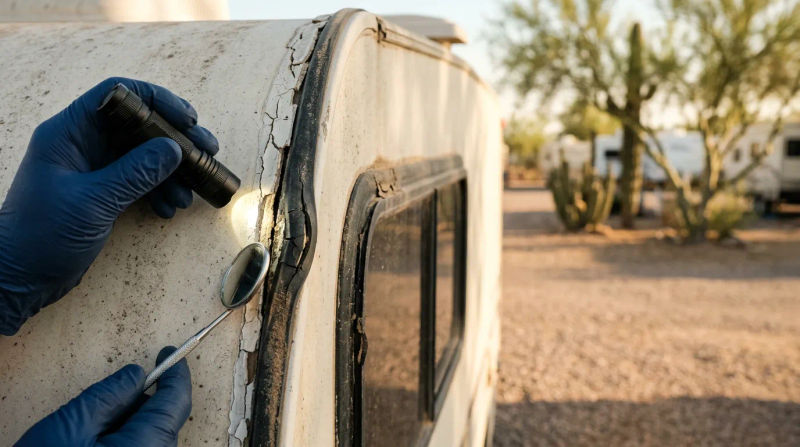
As an on-site specialist here in Buckeye, I see the annual rhythm of RV life up close. You’ve just wrapped up your last big summer adventure, the rig is dusty, and you’re ready for a break. It’s tempting to just park it, lock the door, and forget about it until the travel bug bites again next spring. But I’ve learned over my 9 years in this business that what you do now, in the fall, determines whether your RV is ready to roll or ready for the repair shop come springtime. The shift in seasons, especially the sharp temperature swings we get between our warm days and cool nights, can be brutal on a parked vehicle. A tiny, invisible weakness today can become a catastrophic failure after a few months of sitting unattended.
This is especially true for anyone who enjoys trips up to the higher elevations around Arizona, where September can bring the first real taste of cold. That first freeze thaw RV storage cycle is a stress test for your entire rig. Before you put your RV away for the season, let’s walk through the warning signs I look for that tell me a vehicle might not handle the winter well.
Common Signs and Symptoms
Think of this as a final walk-around before you tuck your RV in for a long nap. Paying attention to these details is the most important part of your RV storage prep. I’ve seen small issues turn into thousands of dollars in damage over a single storage season.
- Dry, Cracked, or Peeling Sealant: Get on a ladder and look closely at the sealant around your roof vents, skylights, air conditioning unit, and along all the corner seams. Is it bright white and flexible, or is it chalky, gray, and pulling away from the edges? Press on it lightly. If it feels hard and brittle instead of pliable, it’s lost its elasticity and is no longer creating a waterproof barrier.
- A “Slow” Electrical System: When you flip a switch, do the lights seem to take a second to reach full brightness? Does the battery monitor show a full charge right after you unplug from shore power, only to drop significantly a short time later? A healthy battery should hold a steady charge. Any sluggishness is a red flag that it’s already weakened, likely from the summer heat, and may not survive the cold.
- Brittle or Faded Exterior Plastics: Feel the cover on your rooftop plumbing vents, your exterior shower compartment, or your city water connection. The intense Arizona sun bakes the plasticizers out of these components all summer long. If they feel stiff and fragile instead of slightly flexible, they are prime candidates to shatter during a freeze.
- A Faint Musty Smell Inside: Don't dismiss a slight musty or damp odor. Your nose is one of the best tools for detecting a tiny, slow water leak. It might not be enough to leave a puddle, but it indicates moisture is getting trapped somewhere - in a wall, under the floor, or in a cabinet. When that trapped moisture freezes, it expands and can tear open the structure from the inside out.
- Tires That Look a Little Low: Eyeball your tires. Do any of them look slightly less full than the others? A slow leak that costs you 1-2 PSI a week in the summer can become much more pronounced as temperatures drop. A tire that goes completely flat over the winter can develop permanent flat spots, ruining it.
- Fog Between Window Panes: If you have dual-pane windows, look for a hazy or foggy appearance between the layers of glass. This means the seal has failed and moisture is trapped inside. This moisture will freeze and expand, putting immense pressure on the glass and potentially causing it to crack.
- An Unsteady Flame on Propane Appliances: Before you shut everything down, fire up your stove and water heater. Are you getting a crisp, steady blue flame? A flickering, yellow, or sputtering flame can indicate moisture in the propane lines or a failing regulator, both of which are problems you don’t want to discover on a cold morning.
What Causes This Problem
Understanding why these things happen helps you appreciate the importance of preventative maintenance. The primary culprit is the dramatic temperature fluctuation of a freeze thaw RV storage cycle, which acts like a relentless cycle of stress on every component of your RV.
For seals, the problem starts with UV damage from our intense sun. The sun bakes the flexible compounds out of the sealant, making it hard. Then, as the day heats up, the different materials of your RV (metal, fiberglass, rubber) expand at different rates. At night, they all contract. This constant push-and-pull motion cracks the now-brittle sealant, creating microscopic entry points for water. When rain or dew settles in those cracks and then freezes overnight, the water expands with incredible force, widening the gap. A proper RV seal check before storage is your only defense against this destructive cycle.
For your electrical system, the issue is twofold. The summer heat degrades the internal chemistry of your lead-acid batteries, reducing their overall capacity. Then, as the weather gets cold, the chemical reaction that produces electricity slows down. A battery that was already weakened by the heat may not have enough power to even prevent itself from freezing (a fully charged battery freezes at a much lower temperature than a discharged one). This is why proper battery care during RV storage - like disconnecting it and keeping it on a trickle charger - is non-negotiable.
Finally, any water left in your plumbing system is a ticking time bomb. Even a few drops in a low point of a water line, a faucet, or the water pump will turn to solid ice. This expansion can easily crack plastic fittings and split copper pipes, leading to major floods the first time you try to de-winterize the rig in the spring.
When to Call a Professional
I’m a big believer in empowering owners to care for their rigs. Many pre-storage tasks are perfect for DIYers. However, it’s just as important to know your limits.
You can likely handle these tasks yourself:
- A thorough visual RV seal check before storage. Get up on the roof and look at every seam.
- Cleaning the roof and exterior to remove dirt that can degrade surfaces.
- Applying a UV-blocking treatment or sealant conditioner to protect surfaces.
- Removing your batteries and taking them home to be stored on a smart tender/maintainer.
- Draining all water tanks and blowing out the lines with compressed air (if you have the right equipment and know-how).
Consider calling an experienced professional for:
- Complete roof resealing: If you find widespread cracking or peeling sealant, scraping it all off and applying a new, even bead is a job best left to someone with experience. A bad sealing job is worse than no sealing job.
- Diagnosing electrical draws: If your battery dies even when everything is off, a professional can trace the parasitic draw that’s draining it.
- Winterizing with antifreeze: While many people do this themselves, a mobile RV technician can do it quickly and ensure every part of the system, including the ice maker and washing machine, is protected.
- Propane system checks: Due to the safety risks, any work on propane lines or regulators should always be handled by a certified technician.
For many of my clients, especially those in newer communities in places like Tolleson with strict HOA rules about working on vehicles at home, hiring a mobile tech to perform these checks at their storage space is the most convenient and reliable option.
Conclusion
Your RV is a significant investment in freedom and family memories. Protecting that investment through a proper RV storage prep process is one of the most important responsibilities of ownership. Before you park it for the season, take an hour to perform a detailed inspection. Check the seals, test the battery, look for signs of moisture, and inspect the tires. Addressing a small issue in September, when the weather is still pleasant, is infinitely easier and cheaper than discovering a disaster next March.
Don’t let a small, fixable problem turn into a season-ending catastrophe. A little diligence now ensures your RV will be just as ready for adventure as you are when spring arrives.
If you notice any of these signs and aren't comfortable tackling the repair yourself, contact a local RV Storage professional for an inspection.